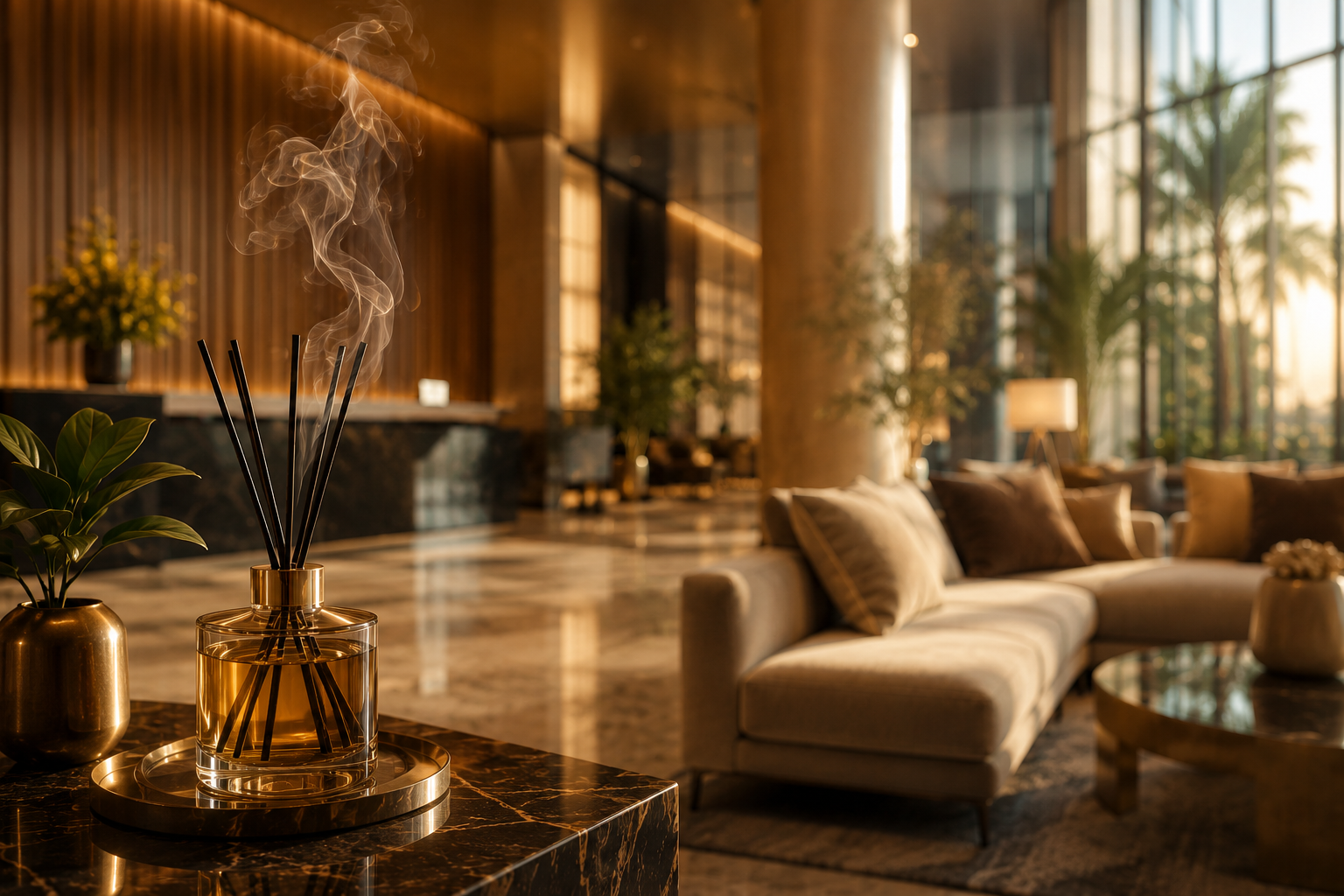
The one design element most premium spaces overlook is fragrance. Interior design, lighting, and furniture shape how a space looks, but fragrance shapes how a space feels and how long it’s remembered. Without a signature scent, even the most beautifully designed hotel, showroom, office, spa, or retail store feels incomplete.
The Problem: Businesses Design for the Eyes, Not the Nose
Walk into almost any premium business today, and you’ll see the same checklist has been ticked off:
All of this is visual. All of it speaks to your eyes.
Long before the eyes register the room, the nose has already made up its mind. That’s the sense most businesses forget to design for, and the one most often left to chance: stale air, cleaning products, or the faint smell of a staff-room lunch.
Think about it this way:
You can get the structure right, the layers, the technique, the craftsmanship and still leave the guest feeling like something’s missing. Fragrance is the “final layer” that most premium spaces skip.
Here’s the shift in thinking that separates good spaces from unforgettable ones:
Fragrance is not an accessory. It’s a memory trigger.
Smell is the sense most directly wired to memory and emotion, because the olfactory bulb sits right next to the brain’s memory and emotion centers (the hippocampus and amygdala). This is why one whiff of a specific scent can instantly transport you back to a childhood home, a hotel from years ago, or a store you visited once.
That means a signature fragrance does something visuals alone cannot:
A hotel lobby’s scent is often the guest’s first and last impression, the moment they check in and the moment they walk out to leave. Luxury hotel chains have built entire brand identities around a single, signature fragrance pumped through their lobbies.
Whether it’s automotive, furniture, or real estate, a showroom is a sales environment disguised as an experience. The right fragrance can make a space feel more premium than its price tag suggests, reinforcing the value of what’s being sold before a salesperson says a word.
A fragranced office isn’t just about pleasant smells for employees. It signals brand standards to visiting clients, partners, and candidates the moment they step off the elevator, often before any conversation begins.
For spas and wellness centers, fragrance isn’t optional. It’s core to the experience being sold. But even here, many spaces use generic, low-quality diffusers instead of a considered, signature scent that reinforces their specific brand of calm.
Retail is where scent marketing has the most measurable impact on behavior. Ambient fragrance in retail environments has been linked to increased time spent in-store and more positive perceptions of product quality, turning a walk-through into a brand moment.
Interior design answers the question: “Does this space look premium?” Fragrance answers a different, arguably more powerful question: “Does this space feel premium and will I remember it?”
The businesses that understand this aren’t just decorating a room. They’re designing an emotion. And in a world where every competitor already has good lighting and good furniture, fragrance is often the one differentiator that makes it worth the space.
Fragrance directly triggers memory and emotion, making it one of the most powerful and most overlooked tools for creating a lasting brand impression in physical spaces.
Scent marketing (or ambient scenting) is the deliberate use of a signature fragrance in a business environment to shape mood, reinforce brand identity, and improve customer experience.
Hotels, showrooms, corporate offices, spas, and retail stores see the most impact, since these are spaces where first impressions and dwell time directly affect brand perception and revenue.
Yes. Ambient fragrance has been shown to influence how long customers stay in a space, how they perceive product or service quality, and how likely they are to remember and return to a brand.
No WhatsApp Number Found!
WhatsApp us
